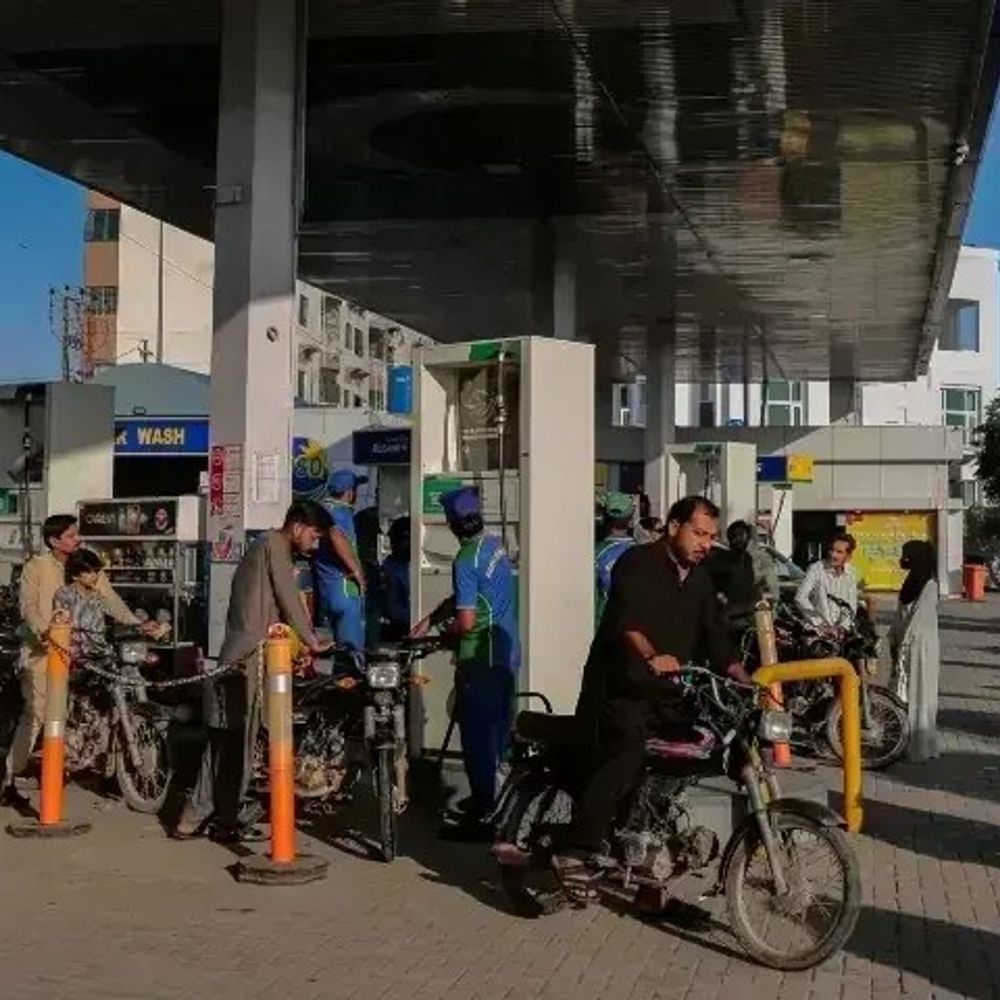
The Government of Pakistan has increased the price of petrol by Rs 5.44 (Pakistani Rupee) per liter and high-speed diesel by Rs 31.05 per liter. After this increase, the price of one liter petrol in Pakistan has become Rs 316.15 and the price of high-speed diesel has become Rs 354.35 per litre. The new prices have come into effect from July 18. Apart from this, the government has now decided to fix the prices of petrol and diesel on a daily basis instead of weekly. The trend of increase started from February. Despite the recent increase, both the fuels remain below their record high (peak level). On April 3, the price of diesel had reached an all-time high of Rs 520.35 per liter. This rise in fuel prices was seen after the start of the US-Iran war on February 28, when diesel was at the level of Rs 281 per liter. On the other hand, the price of petrol also reached a high of Rs 458.41 on April 3, which had started from Rs 266 per liter in the first week of March. Now prices will be decided every day. Petroleum Minister Ali Parvez Malik said that due to the war between America and Iran, prices are changing rapidly in the international market. In view of this, the Union Cabinet and the Prime Minister have decided that now the Oil and Gas Regulatory Authority (OGRA) will be given the responsibility of setting prices on a daily basis. OGRA will not only release new rates every morning on its website, but will also make public how the prices are determined taking into account taxes, margins and other charges at the time the petrol reaches the pump. Earlier, since the beginning of March, the government was reviewing the prices every week. There is only tax of Rs 105 on one liter of oil, dealers warned of agitation. The government is charging huge taxes on petrol and diesel available to the general public. At present, tax of about Rs 105 per liter is being charged on both the petroleum products. This includes custom duty, petroleum levy, climate support levy and inland freight equalization margin. On the other hand, All Pakistan Dealers Association has completely rejected the government’s decision of ‘daily pricing’ i.e. changing the prices daily. The association says that daily price changes will cause problems in their business and stock management. Dealers have warned that they may hold a major protest and strike against this next week. The change in petrol prices will have the biggest impact on the middle class and transport sector. The direct impact of the change in petrol prices is on the middle and lower-middle class of the country, because it is mainly used in private vehicles, small cars, auto rickshaws and two-wheelers. At the same time, due to diesel becoming expensive, there is a danger of inflation increasing in the entire country, because it is used in heavy commercial vehicles (trucks-buses), power plants and big generators. In Pakistan, there is huge sale of about 7 to 8 lakh tonnes of petrol and diesel every month, whereas the monthly demand of kerosene (kerosene) is only 10 thousand tonnes. This is the reason why petrol and diesel remain the biggest source of revenue generation for the government.
Petrol becomes costlier by Rs 5.44 and diesel by Rs 31.05 in Pakistan: Petrol is available at Rs 316.15 and high-speed diesel at Rs 354.35 per litre, new prices applicable from July 18.

Palak
July 18, 2026